
Search Indiana Traffic Ticket Records
Indiana traffic ticket records are court documents kept by county clerks and available through the state's MyCase system. You can look up a citation, check case status, pay a fine, or get a copy of your record using several free and low-cost tools. This guide walks you through where Indiana traffic ticket records are stored, how to search them, and what each source will give you.
Indiana Traffic Ticket Records Quick Facts
Indiana MyCase: Search Traffic Ticket Records Online
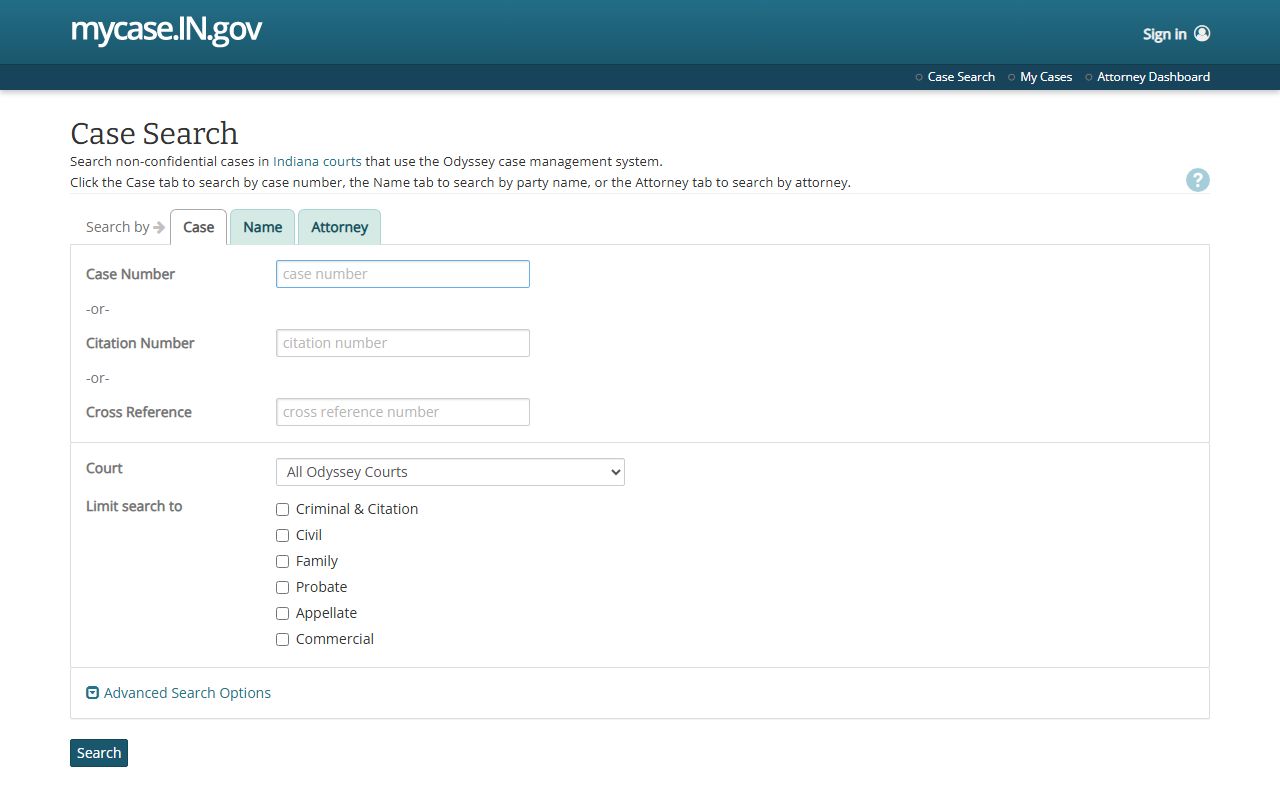
MyCase is Indiana's main tool for searching traffic ticket records online. It runs on the state's Odyssey case management system and covers courts across all 92 counties. Anyone can search at no charge. You do not need an account. The system holds public case data that includes traffic citations, case numbers, court dates, and the current status of each matter.
You can search by name, case number, or UTT number at the Indiana Courts MyCase portal. UTT stands for Uniform Traffic Ticket and is printed on your citation. If you have the UTT number, that is the fastest way to pull up a specific Indiana traffic ticket record. Results show the charge, the court handling the case, key dates, and any fines owed. The information displayed is for reference and may not reflect the most recent payment or court action. Official records come directly from the clerk of the court where the case was filed.
The Indiana Courts MyCase portal at public.courts.in.gov/mycase provides free public access to traffic ticket case information for courts across Indiana.
Most documents tied to traffic cases are available at no charge through MyCase. Some older cases or courts not yet on Odyssey may not appear. If a case does not show up, contact the clerk in the county where the ticket was issued.
How to Find Indiana Traffic Ticket Records
Indiana gives you three main ways to find traffic ticket records. Online is the fastest method. In-person visits work best when you need certified copies or want to review the full file. A phone call can answer quick questions about a fine balance or court date.
To search online, go to public.courts.in.gov/mycase and enter the party name, case number, or UTT number. The search returns a list of matching cases. Click any result to see the charge, court, and payment status. Some courts also have their own local search portals, and the clerk in each county can help you find older records not yet in Odyssey.
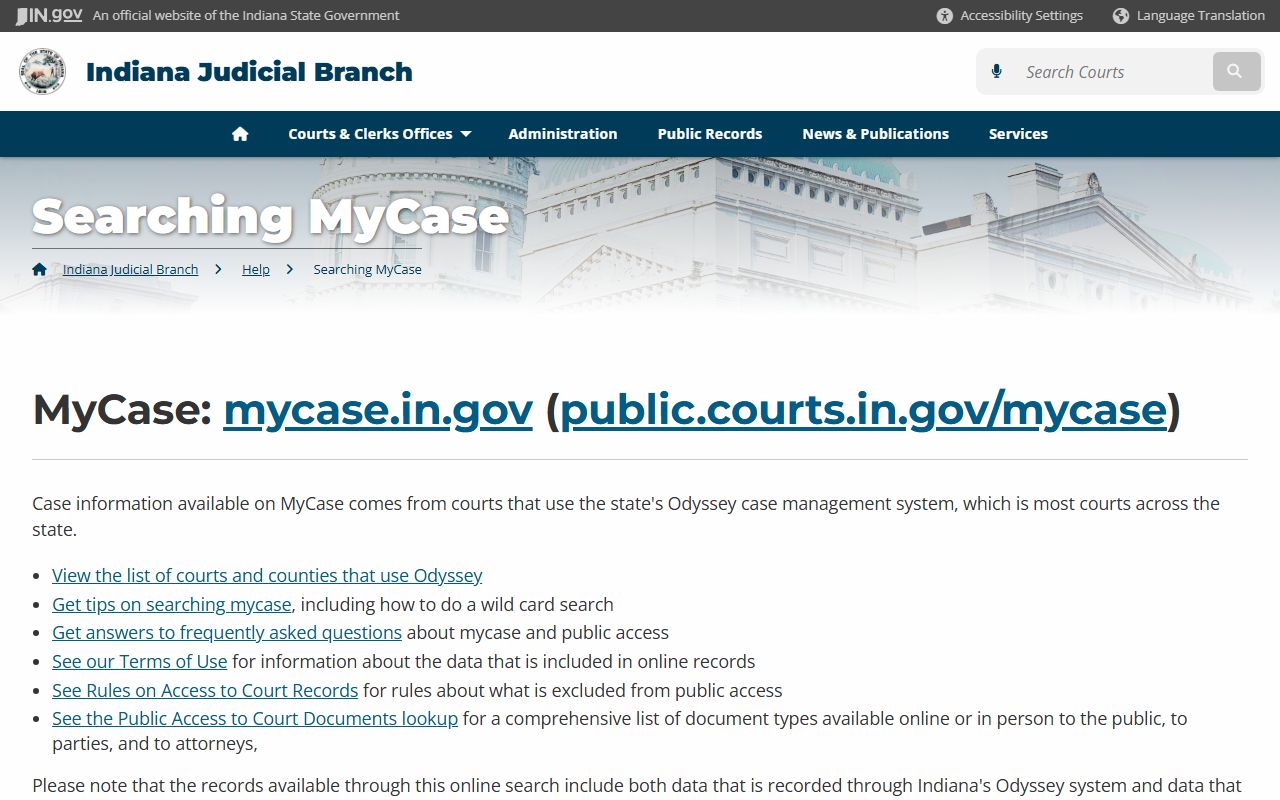
The Indiana Courts help page at in.gov/courts/help/mycase explains how to search MyCase, what types of cases are visible to the public, and how documents are made available online.
Note: Case balances on MyCase may not reflect the most recent payment or accrued interest. Always contact the clerk's office for an official financial balance before making a payment.
Indiana's public records rules are set by IC 5-14-3, the Access to Public Records Act. This law gives anyone the right to inspect and copy court records, including traffic ticket files, unless the record is sealed or expunged. Most traffic ticket records in Indiana are open to the public without a need to show any reason for the request.
The Indiana Courts public records page explains what types of court records are accessible, how to ask for them, and what limits apply to certain documents.
Pay Indiana Traffic Ticket Fines Online
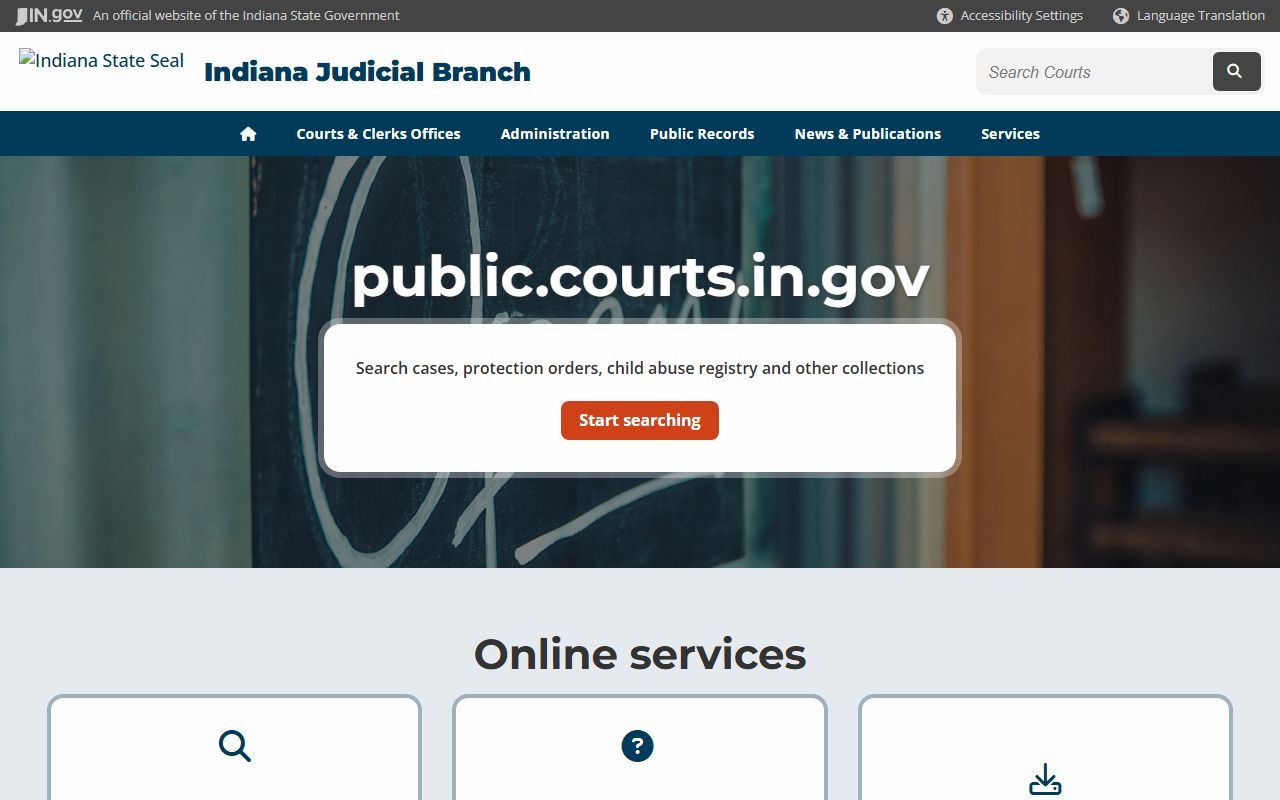
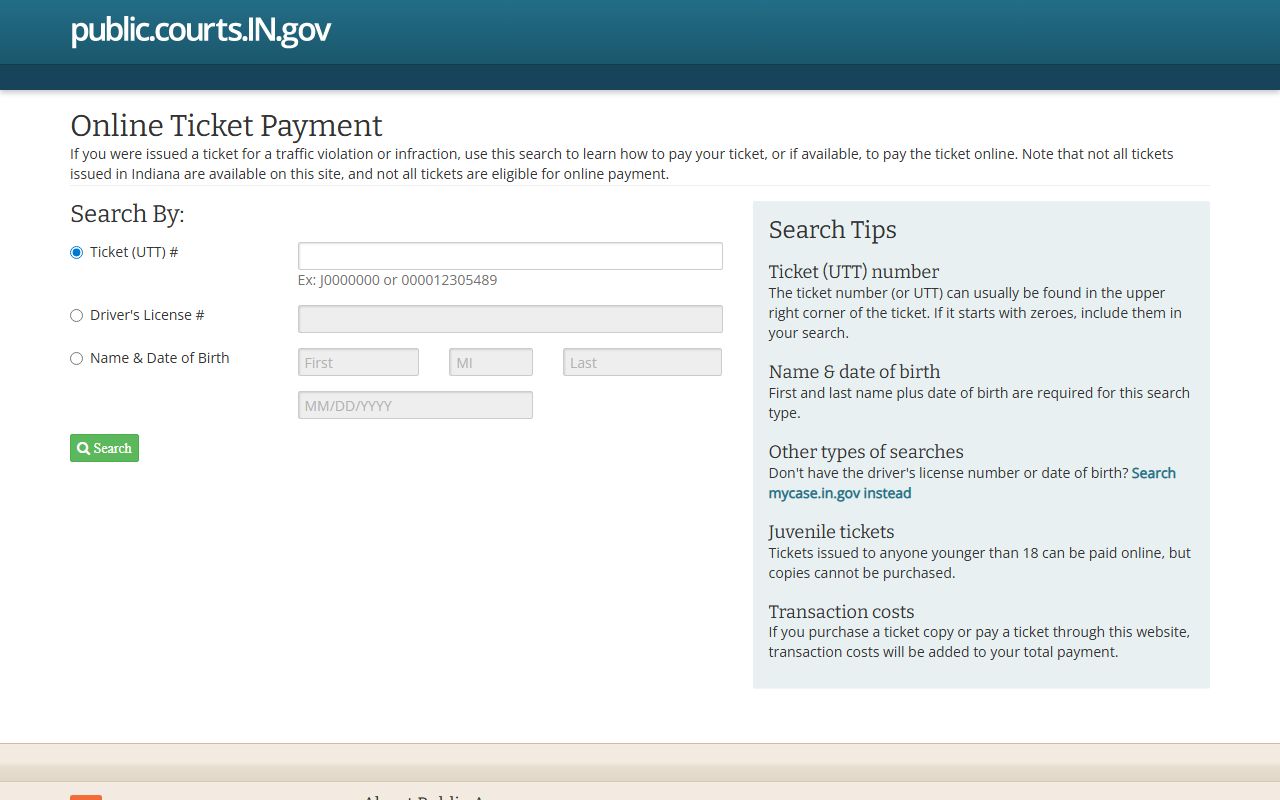
Indiana has a statewide online payment system for traffic ticket fines at public.courts.in.gov/pay. You can search by name, case number, or UTT number and pay directly to the court without visiting in person. Not all courts participate in the online system. If the payment option does not appear in MyCase, contact the local clerk to find out how to pay.
The Indiana Courts payment portal at public.courts.in.gov/pay lets drivers pay traffic ticket fines in many counties without a trip to the courthouse.
Most Indiana courts accept cash, certified check, money order, and credit or debit cards in person. Card payments often carry a processing fee. Online payments may also add a small service charge. Do not send a personal check unless the court tells you this is accepted. Failure to pay a fine can lead to suspension of your Indiana driving privileges under the state's traffic violation rules.
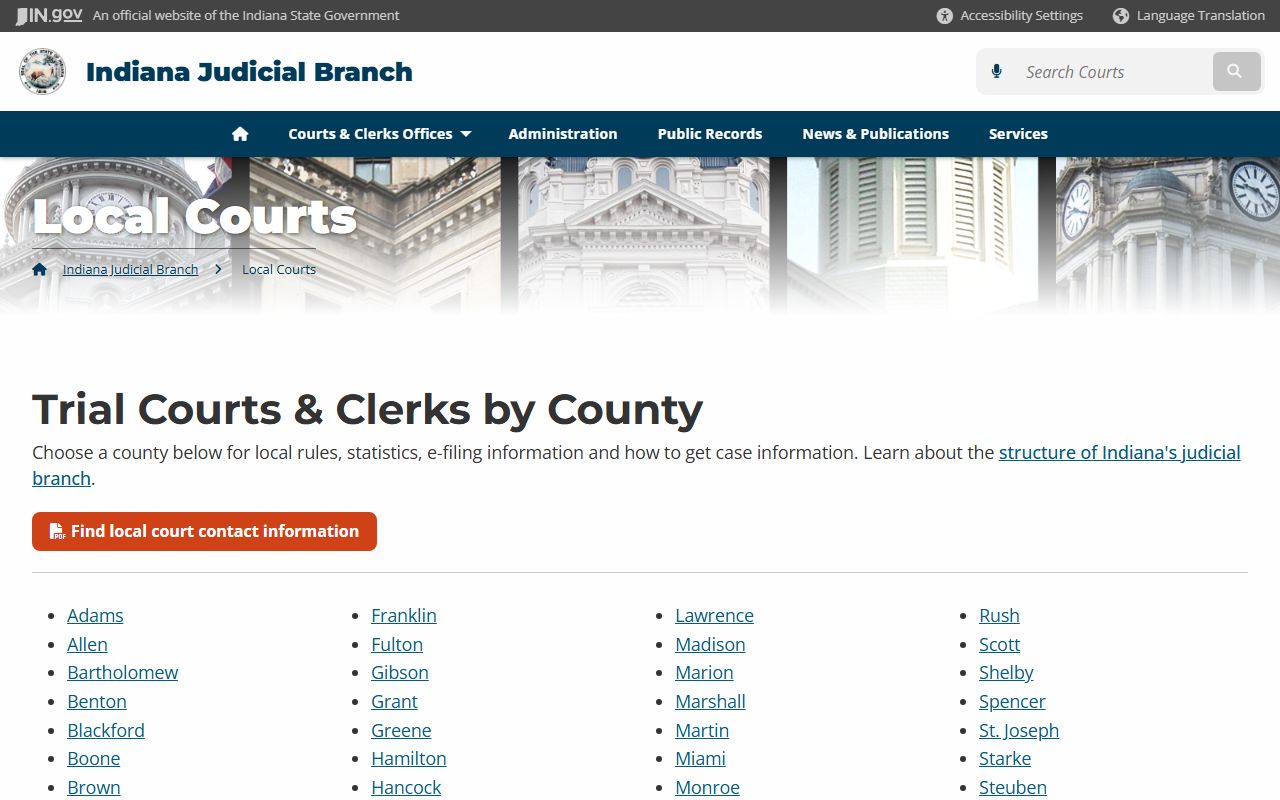
If you are not sure which county handled your ticket, use the Indiana local courts directory at in.gov/courts/local to find contact information for every county court and clerk's office in the state.
Indiana BMV Traffic Records and Driver Points
The Indiana Bureau of Motor Vehicles keeps driver records separate from court case files. Your driver record shows every traffic conviction on your license history in Indiana. Under state law, each conviction of a moving violation carries a point value. Points range from zero to ten depending on the offense. More serious violations earn more points. These points stay active on your driver record for two years from the conviction date, and too many points can trigger a suspension.
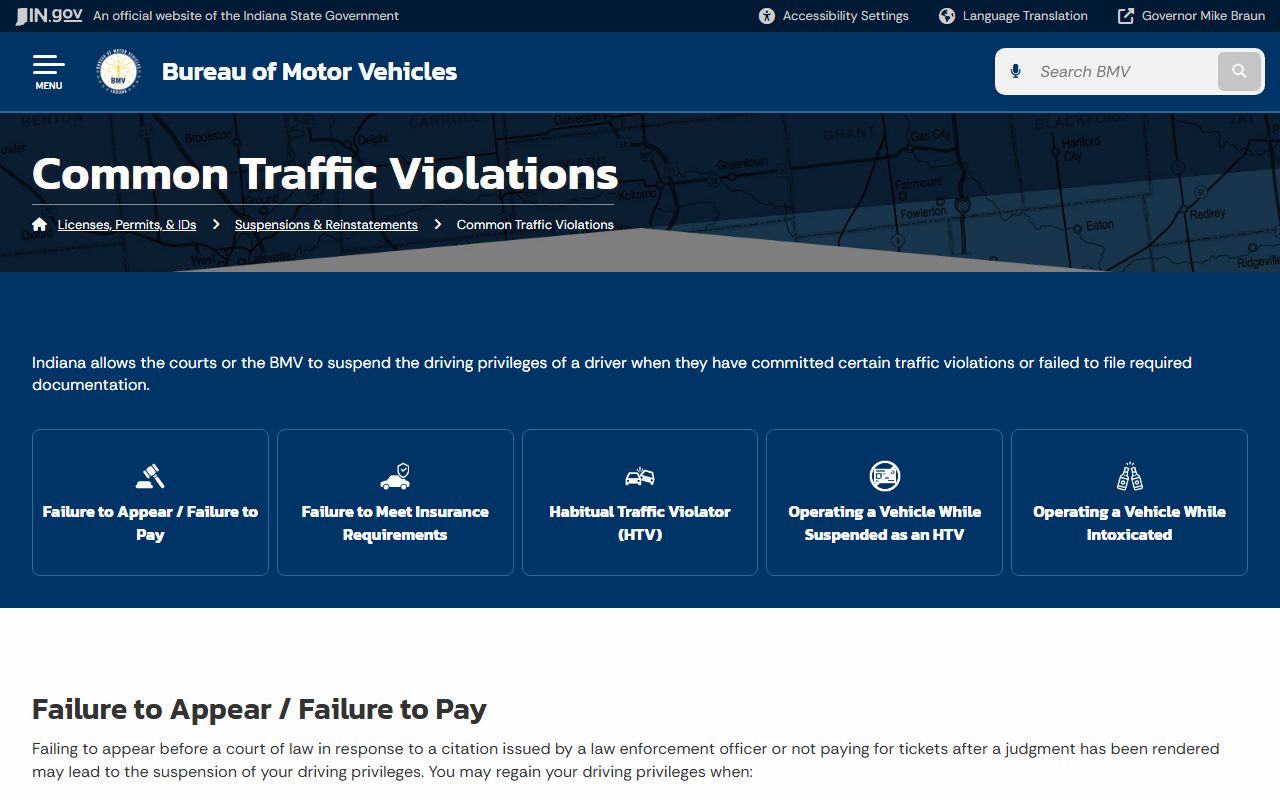
The Indiana BMV page on common traffic violations explains how each type of offense can affect your driving privileges, what documentation the BMV may require, and what steps come next after a suspension.
You can view your driver record at no cost through the BMV's Viewable Driver Record service at mymv.in.gov. This online view is not an official certified record. If you need a certified copy, order an Official Driver Record for $4. Mail the completed State Form 53789 (Request for Certified Records) to the BMV at Indiana Government Center North, Room 403, 100 N. Senate Ave., Indianapolis, IN 46204. You can also pay reinstatement fees by calling 888-692-6841 with your access code or by using a BMV Connect kiosk.
Indiana requires minimum auto insurance coverage of 25/50/25 under IC 9-25-8. That means at least $25,000 per person for bodily injury, $50,000 per accident, and $25,000 for property damage. If the BMV asks you to provide proof and you do not submit a Certificate of Compliance within 90 days, your driving privileges can be suspended. An SR22 form may be required for 180 consecutive days after certain traffic-related suspensions.
Reinstating Driving Privileges After a Traffic Ticket
The Indiana BMV reinstatement page provides step-by-step instructions for restoring driving privileges after a suspension tied to a traffic ticket or court order.
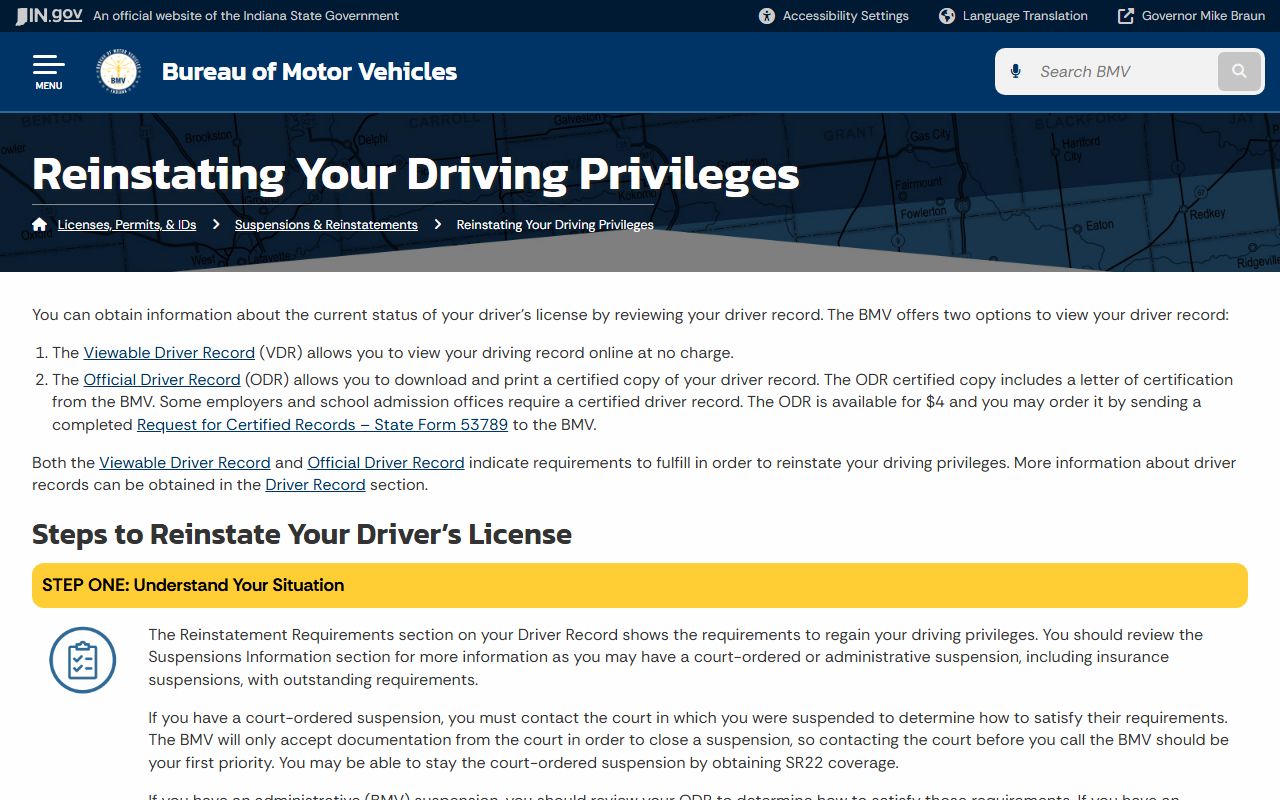
If a court ordered your suspension, contact the court first. The BMV only accepts reinstatement documentation that comes from the court. For an administrative suspension handled by the BMV, review your Official Driver Record to see the exact requirements. The dollar amount owed for each suspension appears in the Suspension Information section of the ODR. In most cases, you must carry SR22 insurance for 180 straight days even after paying the fee.
Habitual traffic violators face long suspensions under IC 9-30-10. A 10-year suspension applies to drivers with two major offenses causing injury or death within 10 years, or three major offenses in any 10-year window. A five-year suspension covers drivers who accumulate nine violations plus one major offense in 10 years. These rules make it critical to deal with every Indiana traffic ticket before it becomes part of a longer pattern. OWI offenses fall under IC 9-30-5, which sets suspension lengths and enhanced penalties for repeat offenders.
Indiana Traffic Violations, Fines, and Speed Laws
Fines for Indiana traffic tickets vary by county and by the type of violation. Speed limit rules come from IC 9-21-5, which sets the maximum at 70 mph on interstate highways and lower limits on state and local roads. School zone and work zone violations require reduced speed and carry higher penalties. Each county sets its own fine schedule for common infractions within those state limits. Some larger counties publish fee schedules online so you can check costs before appearing in court.
The Indiana General Assembly website at iga.in.gov hosts the full Indiana Code where you can look up statutes for traffic violations, fines, suspensions, and driver responsibilities across the state.
Note: Tort claims against a government entity arising from a traffic incident must follow procedures under IC 34-13-3, which requires filing a notice of claim within 180 days of the incident.
Browse Indiana Traffic Ticket Records by County
Each of Indiana's 92 counties has its own Circuit Court Clerk who handles local traffic ticket records. Select a county below to find clerk contact details, local search tools, and payment options for traffic tickets in that area.
Traffic Ticket Records in Major Indiana Cities
Residents of Indiana's largest cities handle traffic ticket matters at the county court or city court serving their area. Find local resources below.